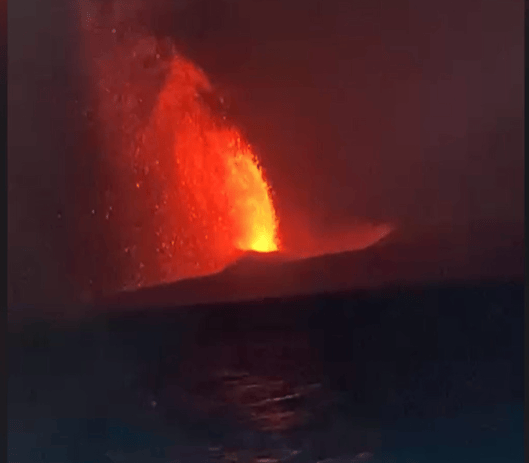
More than 150,000 passengers have reportedly been stranded after a volcanic eruption prompted Indonesian authorities to temporarily suspend operations at six airports.
Soekarno-Hatta International Airport in Jakarta was the first facility to close on Sunday morning after volcanic ash from Anak Krakatau was detected in the airspace surrounding the airport.
Indonesia’s Transport Minister, Dudy Purwagandhi, reported that 467 flights had been affected and urged airlines to consider diverting flights to alternative airports where possible.
The volcano began erupting late on Friday night, producing persistent seismic activity, lava fountains and powerful booming noises that were heard across nearby areas. Authorities subsequently confirmed that the volcano erupted twice more in the early hours of Sunday.
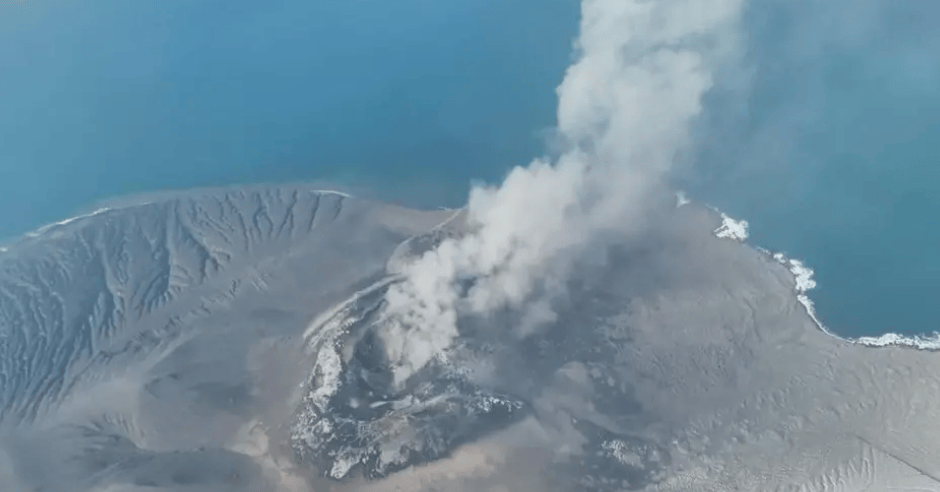
The transport ministry reported that the disruption primarily affected flights operating to and from Singapore, as well as other international destinations, including Doha, Sydney and Kuala Lumpur.
Purwagandhi explained that the decision to temporarily close additional airports followed assessments indicating that volcanic ash had spread towards West Java.
He called on airlines to accelerate the processing of refunds for passengers whose flights had been cancelled and urged carriers to provide timely updates to travellers with upcoming flights. This, he said, would help prevent excessive crowds from gathering at airports.
Indonesia’s Meteorology, Climatology and Geophysical Agency (BMKG) reported that volcanic ash had risen to approximately 20,000 feet (6,000 metres) over Java, to the east of the volcano, while ash levels reached around 50,000 feet (15,000 metres) west of the volcano towards the Sumatra region.

Authorities have confirmed that the recent volcanic activity poses no current tsunami threat. The volcano is located in the Sunda Strait, between the Indonesian islands of Java and Sumatra.
Indonesia’s health minister has advised people living in affected areas to remain indoors and wear protective face masks to reduce their exposure to volcanic ash, which can cause irritation to the respiratory system, eyes and skin.
Local newspaper Kompas reported that several schools cancelled activities on Saturday after students and residents complained of eye irritation caused by the ash. Some fishermen also abandoned planned trips to sea after experiencing similar symptoms.
One local resident, Aldi Candra Prayogi, told the newspaper that he had experienced irritation since Friday evening, describing the sensation as though “small grains of sand” had entered his eyes. He said he had been using eye drops to relieve the discomfort.
Prayogi also described the amount of ash in the area as substantial, explaining that the dust was so thick that he had to sweep the front of his home approximately every five minutes.
Anak Krakatau, meaning “Child of Krakatoa”, has experienced intermittent volcanic activity since emerging from the sea during the early twentieth century. The volcano developed within the caldera created by the catastrophic 1883 eruption of Mount Krakatoa.
In December 2018, Anak Krakatau partially collapsed, triggering a powerful tsunami that killed more than 400 people and left thousands of others injured or displaced along the nearby coastlines of Sumatra and Java.
Following the collapse, scientists determined that some of the rock masses that slid into the sea were estimated to have been approximately 70–90 metres high, illustrating the considerable scale of the volcanic failure.
Anak Krakatau forms part of the wider Pacific Ring of Fire, a vast zone surrounding the Pacific Ocean characterised by numerous volcanoes, earthquake zones and active tectonic plate boundaries. The Ring of Fire extends for approximately 40,000 kilometres (25,000 miles), stretching from the southern tip of South America to New Zealand.
Approximately 90% of the world’s earthquakes occur within this region, which is also home to around 75% of the world’s active volcanoes, representing approximately 452 individual volcanoes.
 JOSSYN