The numbers are no longer subtle. In 2025, nearly 22 million electric cars were produced globally. Almost 75% of them came from China. The country’s carmakers supplied 60% of global EV sales. And its EV exports doubled to a record 2.6 million units, worth $69.6 billion. (IEA).
This is not a story about one company or one clever product. It is the result of a deliberate, decade-long industrial strategy that has reshaped the global auto industry.
China’s EV push was never left to market forces alone. Beijing identified electric vehicles as a strategic industry, and backed that conviction with purchase subsidies, tax rebates, and massive investment in charging infrastructure. The goal was to leapfrog the century-old dominance of Japanese, German, and American combustion engine engineering. The strategy worked. China ended its national purchase subsidy for EV consumers at the end of 2022 and intends to phase out purchase tax rebates by 2027, because policymakers now consider the industry mature enough to stand on its own. (Reuters).
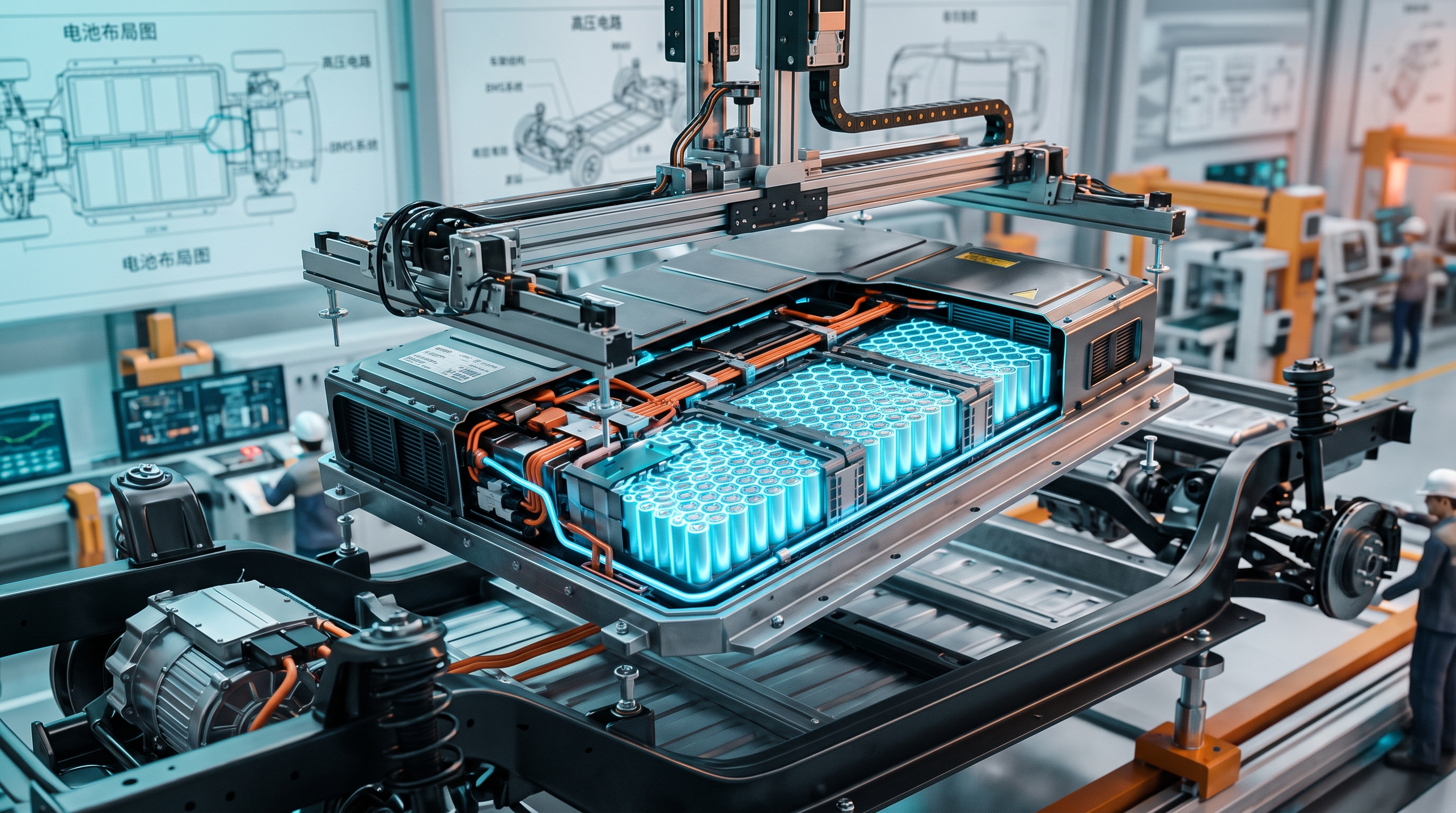
The real leverage, however, lies beneath the chassis. You cannot build an EV industry without batteries, and China controls that layer of the stack. Chinese companies account for over 70% of global EV battery installations. CATL alone held a 39.2% global market share in 2025, its ninth consecutive year at number one. (SNE Research). The technology keeps improving. BYD’s second-generation Blade Battery can charge from 10% to 70% in five minutes and deliver a range of up to 1,000 kilometres. That is not a concept car promise. It is in production. (BYD).
China is also moving faster than most on autonomous driving. In December 2025, the Ministry of Industry and Information Technology granted market access to its first two Level 3 autonomous driving models, from Changan Automobile and BAIC’s Arcfox brand. They will operate on select roads in Chongqing and Beijing. (Reuters). This matters because L3, or “conditional automation,” means the car can handle most driving tasks under specific conditions, with the human driver as a fallback. It is a regulatory and engineering milestone that most Western markets are still debating.
The ICCT’s 2026 Global Automaker Rating found that legacy automakers in the U.S., Japan, and Europe are “faltering in ambition” while Chinese companies accelerate. BYD surpassed Tesla in global battery-electric vehicle sales for the second consecutive year. SAIC and Geely each reached an EV sales share of at least 50%. The competitive gap is widening, not closing. Rachel Muncrief, acting executive director of the ICCT, warned that legacy automakers “risk ceding their leadership in major markets where they historically dominate if they fail to adapt.” (ICCT).
For Nigeria, this shift is not abstract. BYD entered the Nigerian market in March 2025 through Loxea Nigeria, a subsidiary of CFAO Mobility, launching the Dolphin and Atto 3 models. Nigeria became the sixth African country where BYD operates, after Rwanda, Kenya, Côte d’Ivoire, Senegal, and Madagascar. (CFAO Mobility). The Chinese Ambassador to Nigeria, Yu Dunhai, has confirmed that plans are underway to establish EV factories in Nigeria, tied to the country’s lithium resources and local value-addition goals. (Vanguard).
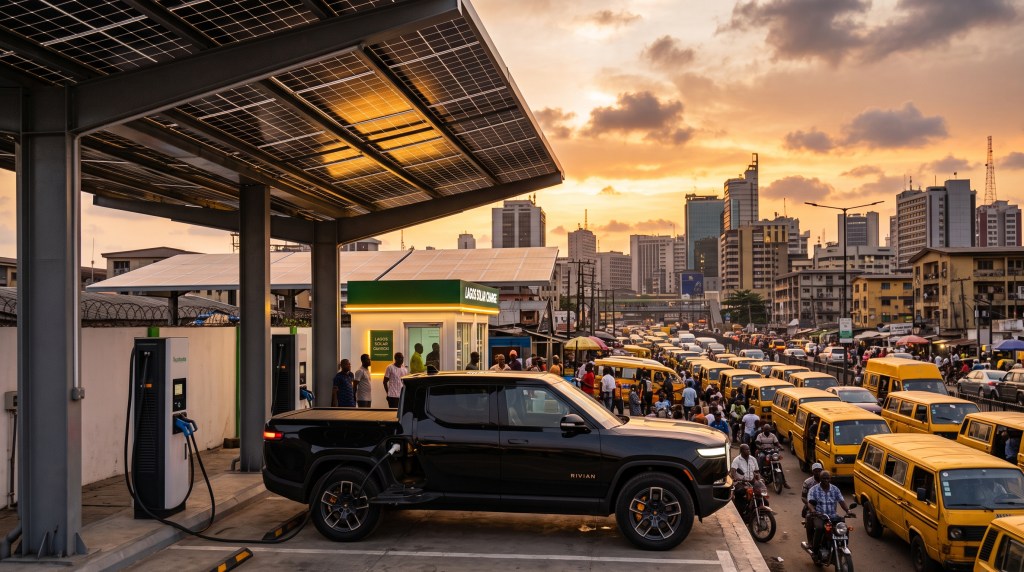
The logic is straightforward. Nigeria has lithium. Nigeria has a large domestic market. Nigeria has some of the highest petrol prices in West Africa since the subsidy removal. Chinese EV makers, facing tariff barriers in Europe and North America, are looking south. The challenge is infrastructure. Nigeria’s power supply remains unreliable, and charging stations are scarce. But the economics are shifting. Electric cars are becoming cheaper to run than petrol cars in Lagos, even if the grid is not ready.
China has already signalled that it will pull back domestic subsidies as the industry matures, and it is shifting focus to exports and overseas manufacturing. Africa is now the fastest-growing region for Chinese EV imports, with a 189% jump in sales to $1.55 billion in 2025. (S&P Global). For Nigerian developers and entrepreneurs, this opens a practical question: what does the after-sales, charging, and software ecosystem look like? The cars are coming. The infrastructure and services are still an open field.
The era of Chinese automotive dominance is not a forecast. It is the current state of the global industry.