Iranian Foreign Minister Seyed Abbas Araghchi has confirmed that Tehran has conveyed a concrete plan to the United States through Qatari mediators. If Washington meets Iran’s conditions, the Strait of Hormuz could be reopened within seven days and normal maritime passage restored (AFP via BSS, 2026).
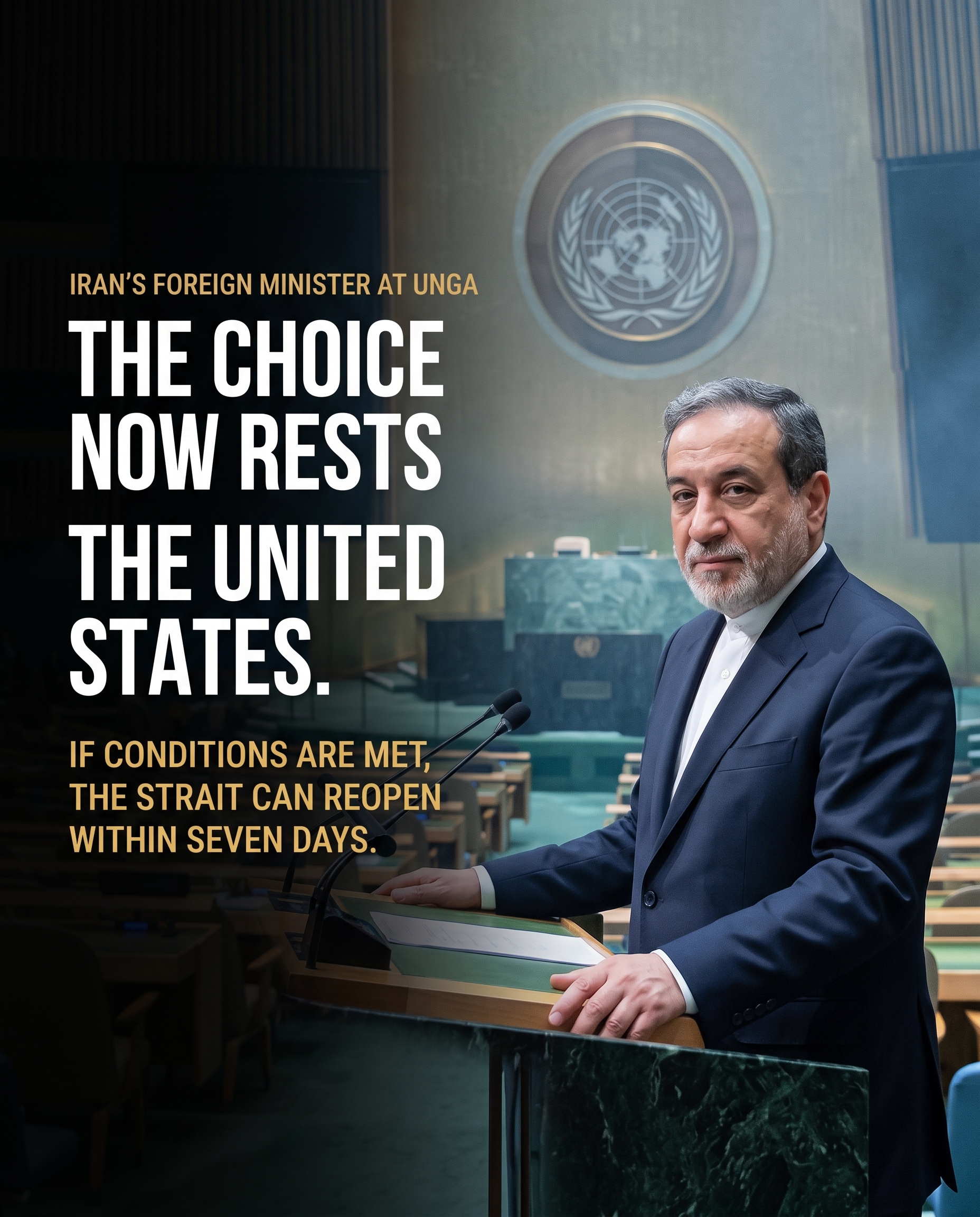
Speaking to reporters at the United Nations General Assembly in New York, Araghchi said the plan was delivered to US officials through indirect channels this week. “If the necessary conditions are met, the strait can be reopened and normal maritime passage restored within seven days,” he said. “The choice now rests with the United States. Iran does not accept coercion, threats, or intimidation, and will not abandon its sovereign rights under pressure” (The Canadian Press, 2026).
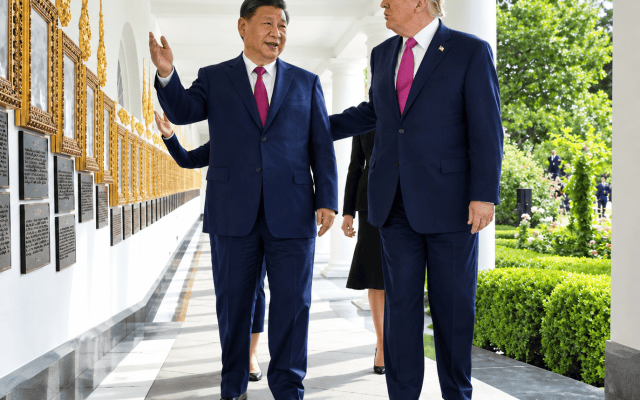
But Trump rejected the proposal outright on Saturday. “They came up with a plan, but I turned it down,” Trump told reporters at the White House. “We have total control of the Strait of Hormuz. Massive amounts of oil are coming out of the Strait of Hormuz. Last night 29 ships went through.” He added: “They want to make a deal, that’s fine. I like deals too, but that deal is unacceptable” (AP News, 2026).
How the Seven Days Would Work
According to media reports and Araghchi’s own account, the seven-day countdown would begin the moment Washington accepts the proposal. Araghchi said the US needs to take certain actions, which he believes could take four to five days. “On the sixth day, the strait would open. On the seventh day, negotiations with the United States would begin to reach a final agreement on mutually agreed issues” (AFP via BSS, 2026).
The plan calls for a seven-day comprehensive ceasefire across the Middle East, including in Lebanon. It also requires the US to lift its naval blockade of Iran, release frozen Iranian assets estimated at no less than $12 billion, and remove sanctions on Iranian oil. On the seventh day of the truce, Iran would reopen the Strait of Hormuz (AFP via BSS, 2026).
Araghchi noted that the proposal draws on a memorandum of understanding signed between the US and Iran in June, which briefly eased tensions before collapsing when Iran fired on commercial ships in the strait it accused of deviating from an approved route (AFP via BSS, 2026).
Why Hormuz Matters
The Strait of Hormuz, between Iran and Oman, is the only maritime route in and out of the Gulf. Before the conflict, it carried roughly one-fifth of the world’s traded oil and nearly one-third of internationally traded fertilizers (UN Media, 2026). Since early March, the near-total closure of the strait has caused global losses of about 10.1 million barrels of oil per day, exceeding the impact of the 1973 Arab oil embargo, the 1979 Iranian revolution, or the 1990 Iraqi invasion of Kuwait (World Bank, 2026).
World Bank Commodity Markets Outlook data shows that after the strait closed, tanker traffic through Hormuz dropped from about 60 ships per day to near zero. Oil prices rose by $46 in March alone, Singapore jet fuel prices doubled, urea prices rose 85 percent, Asian LNG futures rose 46 percent, and Brent crude rose 32 percent (World Bank, 2026).
For Nigeria, a major oil producer, the shock is equally real. The conflict pushed global crude prices higher, and Dangote Refinery’s ex-gate price rose from N1,175 per litre to N1,245 per litre, with retail petrol prices in several states reaching nearly N1,400 in March, the highest nominal level on record in Nigeria (Nairametrics, 2026). About 75 percent of Nigeria’s population, roughly 170.4 million people, already face moderate or severe food insecurity, and rising fertilizer prices could further suppress agricultural output and push food prices higher (World Food Programme, 2026).
Global Diplomatic Pressure and France’s Role
As Araghchi announced the plan, 80 countries issued a joint statement at the UN General Assembly calling for the immediate, full reopening of the Strait of Hormuz and the restoration of freedom of navigation. Bahrain’s Foreign Minister announced the declaration, which was backed by Gulf Arab states and several Western powers (VOV, 2026).
France is separately working on a draft UN Security Council resolution backing freedom of navigation in the strait, reaffirming the need to respect the Law of the Sea, and supporting peaceful initiatives aimed at ensuring safe passage. French President Emmanuel Macron discussed the issue with Trump during the UN General Assembly, and diplomats said Paris wants to separate the strait’s security from broader Iran tensions, emphasising the common interest in maintaining freedom of navigation and energy access (The Canadian Press, 2026).
The Core Disagreement
Analysts say a comprehensive peace deal remains distant because Washington and Tehran have not agreed on the sequence of resolving issues. Iran wants military de-escalation, the lifting of the naval blockade, and sanctions relief first, before any talks on its nuclear program. The US wants the nuclear file addressed from the start (VOV, 2026).
Urban Coningham, a researcher at the Royal United Services Institute, described Hormuz as a “red line” for Tehran and one of its most important economic levers. He said Iran is unlikely to receive war reparations, making control over the strait its only path to economic recovery, and therefore unlikely to abandon that demand (VOV, 2026).
While Trump publicly rejected Iran’s proposal, the White House said US officials were having “positive and constructive conversations” with mediators. But according to the Wall Street Journal, citing US officials, Trump privately doubts Iran will meet his demands and has told aides he expects to resume bombing after the November congressional elections (Wall Street Journal, 2026).
For global energy markets still waiting for the strait to reopen, the seven-day clock has not started. Washington has already pressed the reject button.