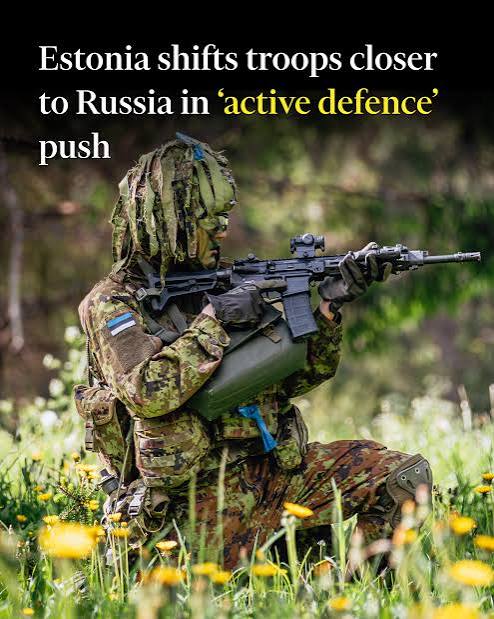
A new assessment reported by the Financial Times says Estonia is changing its military posture, moving forces closer to the Russian border and acquiring longer-range weapons capable of striking targets deep inside Russia. The changes reflect growing concern in Tallinn that Moscow could eventually attempt a limited military operation designed to test NATO’s willingness to defend one of its smallest members. (Financial Times). The development is significant because Estonia is not preparing simply to absorb a potential Russian attack. Its emerging strategy is based on forward defence and the ability to respond immediately including striking Russian military targets inside Russian territory if Estonia is attacked.
Estonia Military Defence
Estonia is one of the three Baltic states, alongside Latvia and Lithuania, and shares a land border with Russia. It is also a NATO member, meaning that an armed attack against Estonia would potentially invoke Article 5, NATO’s collective-defence commitment. The country’s geography makes the issue particularly sensitive. Estonia is relatively small, has a population of about 1.4 million and sits directly on NATO’s northeastern frontier. Its eastern border is only around 50 kilometres from some of the country’s principal military positions being developed under the new strategy. (ERR). Estonia also does not possess a conventional fighter-aircraft fleet of its own and therefore relies heavily on NATO for air policing and broader air-defence support. (Financial Times).
Estonia moving troops closer to Russia borders
According to the Financial Times, Estonia is moving away from an approach that would allow Russian forces to enter its territory before launching a major counteroffensive. Instead, its armed forces are adopting what officials call “active defence.” Colonel Tarmo Kundla, commander of Estonia’s 1st Infantry Brigade, told the Financial Times: “We have to start from the border and win from the first battles.” Under the new approach, Estonia is permanently moving its principal combat brigade from Tapa to Jõhvi, bringing it substantially closer to Russia’s border. New military facilities are being constructed at Jõhvi. (Financial Times). The change reflects lessons Estonian planners have drawn from Russia’s invasion of Ukraine, particularly the importance of rapidly deploying forces, drones, artillery, intelligence and long-range weapons.\ One of the most consequential elements of the strategy is Estonia’s investment in weapons capable of hitting targets well beyond its immediate border. Estonia is acquiring American-made HIMARS multiple-launch rocket systems and South Korean Chunmoo systems, while allied forces operating in Estonia are also bringing longer-range unmanned systems. (Financial Times). British forces participating in Estonia’s Spring Storm military exercise reportedly brought Nyan attack drones designed for deep strikes. The systems reportedly have a range of approximately 300 kilometres. That range would put numerous Russian military installations in the wider region and potentially areas around St Petersburg within reach. (ERR). Estonian planners fear that Russia might eventually calculate that it could launch a limited operation against a NATO country without triggering a large-scale alliance response. Rather than attempting an outright invasion and occupation of Estonia, Moscow could theoretically attempt something more limited for example, a short military incursion, seizure of a small area, or another action intended to create political confusion. The Financial Times reports that Estonian military and intelligence chiefs do not currently believe Moscow intends to launch a full-scale war against NATO in the immediate future. Their concern is instead that the Kremlin could eventually attempt an opportunistic, smaller-scale action designed to test NATO’s collective-defence commitment. (Financial Times).

Estonia Prepares for Russia Invasion
One of the most striking assessments attributed to an Estonian military intelligence official is that current deterrence is insufficient. According to the report: “Deterrence is not working. “The official reportedly said the critical period for strengthening Estonia’s defences could be the next one to four years. (ERR).
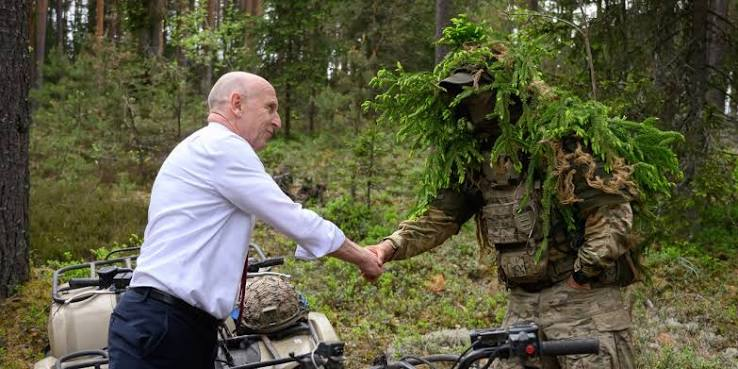
Estonia Military preparation
This does not mean Estonia believes a Russian invasion is imminent. Rather, it reflects concern about the medium-term strategic balance, particularly what could happen if the war in Ukraine ends or significantly decreases in intensity. However, there is an apparent paradox in Estonia’s assessment. The continuing war in Ukraine currently keeps a large portion of Russia’s military forces committed to the Ukrainian battlefield. Consequently, Russia’s ability to immediately open another major front against NATO is constrained. But Estonian officials fear what could happen after the war. If fighting in Ukraine stops, Russia could potentially: redeploy combat troops toward its western borders; replenish and reorganize forces that have been depleted; use combat experience gained in Ukraine; continue expanding its defence-industrial production; rebuild military formations near NATO’s eastern flank. The Financial Times reports that Estonian officials therefore have an unusual concern: they are not only worried about the continuation of the war; they are also worried about what a Russian military freed from the Ukrainian battlefield might look like after the conflict. (ERR). The central issue is whether NATO’s Article 5 commitment is sufficient to deter Russia. Article 5 states that an armed attack against one NATO member is considered an attack against all, although each member determines what action it considers necessary. For Estonia, the concern is not simply whether NATO would ultimately respond. It is whether Russia might believe that political disagreement or hesitation could delay an effective response. That is why Estonia wants its own military to be capable of inflicting substantial costs immediately. The strategy effectively says: Russia should know before launching an attack that Estonia can fight back immediately and that Russian military assets will not necessarily be safe behind the border.