This article is for educational purposes only and does not replace professional clinical advice. If you have concerns about your heart health or stimulant use, speak to a qualified healthcare professional.
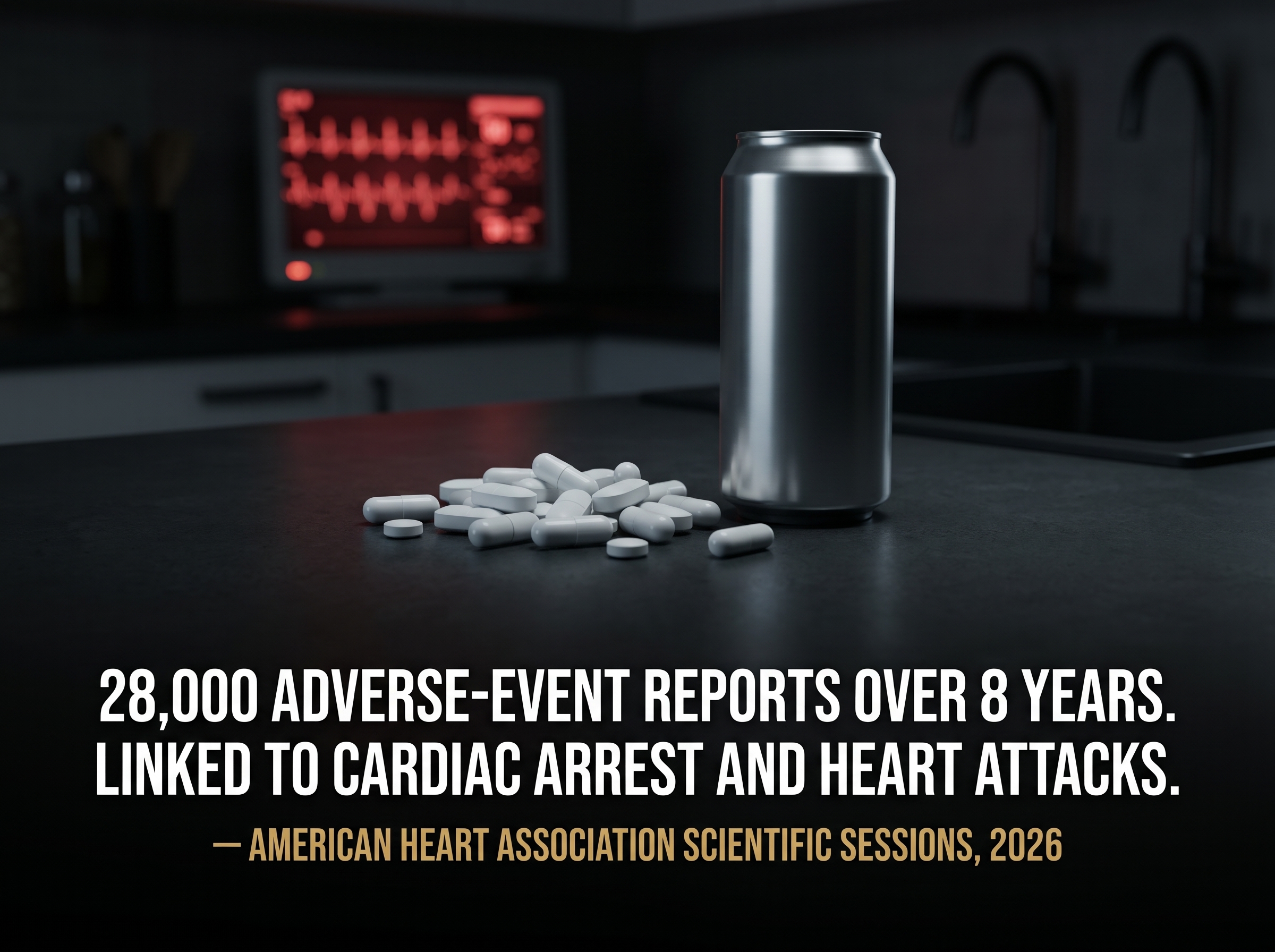
A new review of more than 28,000 adverse-event reports submitted to the US Food and Drug Administration over eight years has found that caffeinated energy drinks and stimulant supplements were linked to serious heart conditions, including cardiac arrest and heart attack, far more often than other products. The findings were presented at the American Heart Association’s Scientific Sessions 2026 and have not yet been peer-reviewed, meaning they should be treated as preliminary until published in a full journal article .
What the Data Actually Shows
Researchers analysed reports submitted to the FDA’s postmarketing reporting system between 2017 and 2025 for people aged 13 and older. About 850 reports involved caffeine- or stimulant-containing products identified by product-name keywords, and these were compared against reports involving other FDA-regulated foods and dietary supplements such as soft drinks, protein bars, and vitamins .
The results were striking. Reports involving energy drinks and stimulant supplements were about 11 times more likely to name cardiac arrest than reports for other products. Heart attacks were about 4.5 times more likely, ventricular arrhythmias and palpitations about four times more likely, elevated heart rate nearly three times more likely, chest pain 2.71 times more likely, and fainting about twice as likely .
Eight of the ten cardiovascular outcomes the researchers checked met their criteria for disproportionate reporting. Importantly, the figures reflect the proportion of reports naming an event, not the rate of events among all consumers. The study does not prove that these products cause cardiac events, only that they appear disproportionately in reports of serious cardiovascular harm .
Why Young Adults Are Vulnerable
Nearly half of the reports linking these products to heart emergencies involved adults aged 18 to 34, a group not usually considered at high risk for cardiovascular events .
The researchers could not say definitively why young adults appear more affected. One possibility is consumption patterns. Young adults may drink energy drinks before intense exercise, mix them with alcohol or other drugs, or consume them in larger quantities than older people . Another factor is the caffeine concentration itself. Some energy drinks contain as much as three times more caffeine per fluid ounce than brewed coffee, and some pre-workout supplements contain more than 12 times as much .
The American Heart Association’s 2026 scientific statement on caffeine and cardiovascular disease states that up to 400 milligrams of caffeine per day, roughly five 8-ounce cups of black coffee, is generally safe for most adults . The problem is that regular consumption of high-concentration products can quickly push someone past that limit without them realising it.
The regulatory gap matters here. The FDA regulates energy drinks and stimulant supplements as foods or dietary supplements, not as medications. They do not go through the same premarket safety testing required for drugs . As study author Sai Samayamanthula put it: “These products are marketed as everyday pick-me-ups and sold next to soda and bottled water, so most people assume they carry no real risk” .
How to Read Caffeine Labels
Not all food and drink labels include the amount of caffeine in a product. Energy drinks often contain caffeine from multiple sources, including green tea extract, yerba mate, and guarana, which can make the total dose difficult to calculate .
Here is what to look for. First, check whether the label states total caffeine content in milligrams per serving and per container. A single can of energy drink can reach 350 milligrams of caffeine, which is close to the daily limit for a healthy adult and well above what is appropriate for children and teenagers . Second, note the serving size. A product may list caffeine per 100 millilitres, but the can may contain two or three servings. Third, be aware of hidden sources. Caffeine is not only in drinks. It appears in over-the-counter medicines, pre-workout supplements, weight-loss products, gum, and even some snacks .
Health Canada’s expert panel recommended that stimulant-containing drinks carry clear labels stating the dose per container, the maximum dose per millilitre, and the maximum daily dose from all caffeine sources. It also recommended that these products not be recommended for anyone under 18 . The American Academy of Pediatrics advises that caffeine use is not recommended for children and teens at all .
The Clinical Takeaway
For healthcare professionals, the study’s message is practical. Clinicians should consider asking younger patients who present with palpitations, chest pain, or fainting whether they use energy drinks or stimulant supplements . For consumers, the message is not that an occasional energy drink will stop your heart. It is that regular use of high-concentration products can push you past a limit your body may not tolerate, and the warning signs are easy to miss.
The study’s authors called for more systematic safety monitoring of these products and for prospective surveillance . Until that happens, reading the label carefully and knowing your own limits is the most reliable protection available.