Tag: politics

  • Xi Jinping Arrival in New Dehli for BRICS Summit: An opportunity for China -India Diplomatic Engagement

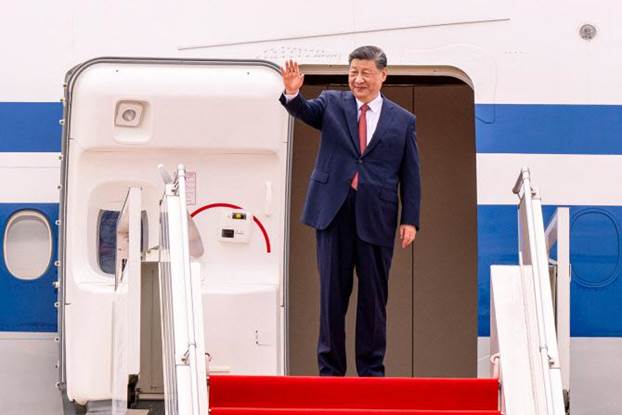
    Chinese President Xi Jinping has arrived in New Delhi for the 18th BRICS Summit, marking his first visit to India in nearly seven years. His arrival on 12 September 2026 is one of the most closely watched diplomatic events of the summit because it brings together the leaders of two Asian powers whose relationship has been simultaneously defined by economic interdependence, strategic competition and unresolved border tensions. (Reuters). The visit is particularly significant because Xi’s last visit to India preceded the devastating 2020 Galwan Valley border confrontation, after which relations between Beijing and New Delhi deteriorated sharply. The fact that Xi is now back in the Indian capital suggests that both governments see value in reopening high-level engagement despite the persistence of major disagreements. (Reuters)
    India is hosting the 18th BRICS Summit in New Delhi on 12–13 September 2026, under its BRICS chairmanship. The summit brings together the expanded BRICS membership, including Brazil, Russia, India, China, South Africa, Egypt, Ethiopia, Indonesia, Iran, Saudi Arabia and the United Arab Emirates. (AP News). BRICS has changed dramatically since its original formation. What began as a grouping of Brazil, Russia, India and China has evolved into a much larger Global South platform. The expanded membership gives the organization greater economic and geopolitical weight but also makes consensus more difficult. The 2026 summit therefore provides Xi and Modi with something they badly need: a neutral multilateral environment in which they can meet without presenting the encounter exclusively as an India-China bilateral negotiation.
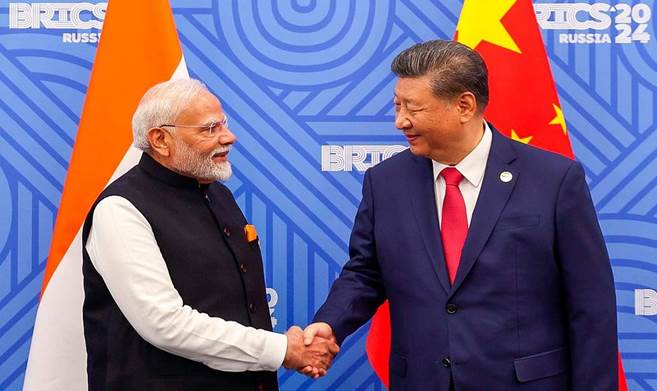
    However, the meeting can ensure that two governments have gradually taken steps to reduce tensions. Military disengagement in some disputed areas has helped create conditions for greater diplomatic contact, while restrictions affecting travel, trade and investment have also begun to ease in some areas. Nevertheless, the relationship remains far from normal. (The Indian Express). In the sense, it is still inappropriate to conclude that an alliance will be formed between the two nations. Though, the strategic stabilization of the regions cannot be ruled out as both countries appear to recognize that permanent confrontation would impose significant economic and security costs.

    Written By

    Tochukwu Nicholas Ugwu
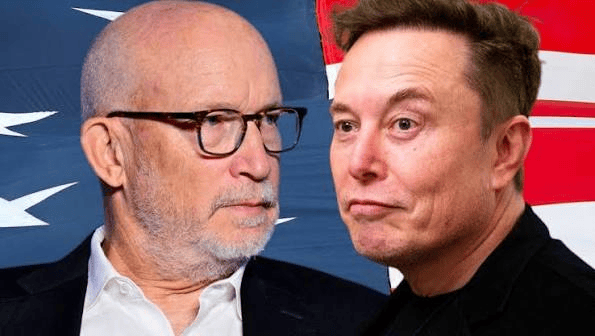
  • ELON MUSK DISPLEASURE ABOUT Alex Gibney Over the Four-Hour Musk DOCUMENTARY

    Elon Musk has launched an increasingly aggressive public confrontation against Oscar-winning documentary filmmaker Alex Gibney, following the world premiere of Gibney’s nearly four-hour documentary Musk at the 2026 Venice Film Festival. The dispute has moved beyond criticism of the film itself, with Musk personally targeting Gibney on X, the social-media platform he owns, while his lawyer has warned that the filmmakers could face legal action over alleged defamatory claims. (The Guardian). Musk is an approximately four-hour examination of Musk’s rise from his early technology ventures to his position as one of the world’s most powerful businessmen and political figures. Gibney examines Musk’s roles in Tesla, SpaceX and X, as well as his growing involvement in politics and his relationships with government institutions and political leaders. However, the documentary premiered at Venice on September 8, 2026, outside the competition. Rather than presenting Musk simply as a technology entrepreneur, Gibney attempts to examine how Musk accumulated such enormous economic, technological and political influence. The film also explores controversies surrounding Tesla’s autonomous-driving technology, Musk’s acquisition of Twitter, his political activities and his relationship with former President Donald Trump. (Reuters). Gibney has said that the project became substantially larger as Musk’s influence expanded. According to Reuters, the filmmaker described a significant reluctance among people who had worked with or around Musk to speak publicly, saying there was a “tremendous sense of fear” among critics, business associates and even friends. (Reuters). According to reports, the film includes testimony from Musk’s former partner Ashley St. Clair that has been interpreted as raising questions about whether Musk could have used Starlink technology in connection with election interference. Musk’s legal team strongly rejects that implication. Spiro argued that Starlink’s laser communications are inter-satellite links and are not connected to vote tabulation. (New York Post). The legal warning is important because it changes the dispute from a conventional disagreement between a documentary subject and filmmaker into a potential defamation case. Musk’s legal team has reportedly demanded preservation of documents related to the production, a step that can precede litigation. (People.com). however, Gibney and his production company, Jigsaw Productions, have defended the film as a fact-based investigation. The filmmakers maintain that the documentary was produced as an examination of Musk’s public activities and influence rather than as a fictional attack on him. (People.com). The filmmaker’s approach is consistent with his wider documentary career. Gibney has previously produced investigations into powerful corporations, political institutions and controversial individuals, including films concerning Enron, Scientology and Elizabeth Holmes. For Musk, he relied heavily on interviews with people who had personal or professional connections to Musk, archival material and Musk’s own public statements. Because Musk declined to participate, Gibney used an AI-generated representation of Musk constructed from his existing public statements and interviews. The filmmakers say they consulted lawyers before using the technique. (The Washington Post).

    Written By

    Tochukwu Nicholas Ugwu

  • THE DIPLOMATIC CONSEQUENCES IMPOSED ON THE UAE BY ALGERIA

    Tochukwu Nicholas Ugwu

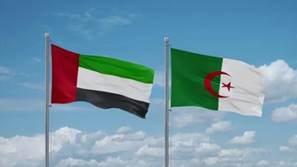
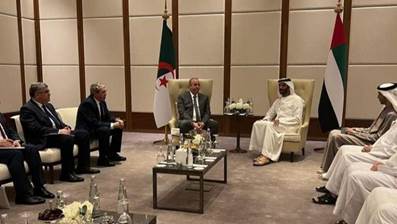
    Algeria has taken a dramatic step in its foreign policy by announcing that it is severing diplomatic relations with the United Arab Emirates (UAE). Algiers said it had reached the decision after exhausting “all means” and “all available avenues” for preserving bilateral relations.  The announcement represents a major deterioration in relations between two influential Arab and African-linked states. It could have consequences extending beyond Algeria and the UAE, particularly in North Africa, the Sahel, Libya, the Western Sahara dispute and the wider Arab world. (AP News)

    According to Algeria’s Foreign Ministry, the decision followed what Algiers described as a series of increasingly “provocative or hostile actions” by the UAE. Algeria said it had exercised restraint and repeatedly warned Abu Dhabi about the consequences of what it considered unacceptable conduct. The Algerian government said those actions eventually reached a point that could no longer be tolerated within relations between two sovereign states. The UAE ambassador in Algiers was summoned and formally informed of the decision, with 48 hours to leave Algeria. (APS). The announcement did not identify one single incident that triggered the rupture. This is important: the break appears to be the culmination of several years of accumulating disagreements, rather than a dispute over one isolated event. Reuters reported that tensions have increased over regional politics, while Algeria has previously accused an unnamed Gulf state widely understood to be the UAE of interference in its internal affairs. (Reuters). The UAE, for its part, has indicated that it hopes the rupture will be temporary and that the two countries’ “fraternal ties” can eventually be preserved. (AP News).  However, this decision has been building up for a while, considering that in February 2026, Algeria began the process of cancelling an air-services agreement with the UAE that had been signed in Abu Dhabi in 2013. Reuters reported that the move occurred amid increasingly strained relations. (The Straits Times). That earlier dispute was an important warning sign. It suggested that the disagreement was moving beyond political rhetoric into practical bilateral relations involving aviation and transportation.  The September decision therefore represents a much more serious escalation.

    Also, Algeria has generally advocated a political solution to Libya’s conflict and has emphasized the country’s territorial integrity and sovereignty. The UAE, meanwhile, has historically developed relationships with actors in Libya that have placed it on a different side of regional political struggles. Algiers is highly sensitive to developments along its southern borders, especially instability in Mali, Niger and Libya. Any external power expanding its political or security influence in those areas can therefore become a matter of national-security concern for Algeria. Though, Abu Dhabi has spent years building its reputation as an important diplomatic and economic actor across Africa and the Middle East. A rupture with Algeria damages that image because Algeria is one of Africa’s largest countries geographically and one of the continent’s important energy producers. The UAE also risks losing access to economic opportunities in Algeria. However, the UAE has a major advantage because it has diversified relationships across Africa and the Arab world. Therefore, the UAE may be able to absorb the economic consequences more easily than Algeria, particularly if the dispute remains limited to bilateral relations.