Brazil is entering the 2026 general election with an unusual and legally significant approach to preventing organized-crime groups from gaining influence through elected office. Electoral courts, particularly in Rio de Janeiro, have been rejecting some candidate registrations where judges find evidence of links to criminal or paramilitary organizations even when the candidate does not have a criminal conviction by an appellate court. The issue is controversial because Brazil’s ordinary electoral ineligibility rules generally rely on criminal convictions, while the newer approach uses a constitutional prohibition on the involvement of paramilitary or similar criminal organizations in the electoral process. The Brazilian Supreme Electoral Court (TSE) has interpreted that provision as capable of directly preventing candidacies. (Reuters).
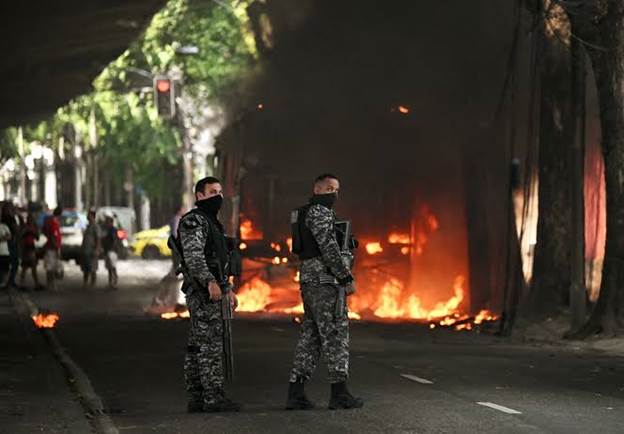
Organized crime prohibited from election
As of September 2026, Brazilian electoral prosecutors and courts have been challenging a growing number of candidacies because of alleged connections to organized crime. Reuters reported on September 22 that 20 candidates had been barred in cases reviewed by the news agency and that none had an appellate-level criminal conviction. The cases form part of a broader effort to prevent criminal organizations from using political candidates, campaign structures and electoral networks to expand their influence. (Reuters). Separately, Brazil’s Public Prosecutor’s Office had challenged 23 candidacies in six states over suspected links to organized crime, according to Brazilian reporting. The cases were concentrated particularly in Rio de Janeiro, but also involved Paraíba, São Paulo, Mato Grosso do Sul, Amapá and Bahia. (Folha de S.Paulo). This does not mean that every person merely accused of having criminal connections is automatically prohibited from running. The electoral courts examine the evidence in individual cases, and some challenges have been rejected or proceedings suspended when judges considered the evidence insufficient. For example, the Rio de Janeiro electoral court suspended proceedings involving candidates Wagner dos Santos Carneiro and Márcio Canella to obtain additional information. In another case involving Antônio Rueda, the court said the evidence presented consisted largely of media reports and third-party publications and required further investigation. (Justiça Eleitoral).

Organized crime Ban in Brazil election
The key legal provision is Article 17, paragraph 4, of Brazil’s Federal Constitution. It states that political parties may not use paramilitary organizations. The Brazilian Supreme Electoral Court has interpreted this provision more broadly than simply prohibiting a political party from formally establishing a paramilitary organization. The TSE’s current interpretation is that the constitutional provision can also prevent direct or indirect participation of organized criminal groups in elections, including through candidates associated with such groups. (Tribunal Superior Eleitoral). However, in March 2025, the TSE formally consolidated this interpretation, stating that the prohibition against candidacies involving members of paramilitary organizations or similar groups derives directly from Article 17(4) and is intended to prevent organized criminal groups from interfering directly or indirectly in the electoral process. (Tribunal Superior Eleitoral). This interpretation is important because it provides a legal route different from the conventional criminal-conviction-based system of electoral ineligibility.