On October 1, 2026, U.S. authorities arrested Ashton Hamed Ellaboudy, 51, of Richland, Washington, a Department of Energy (DOE) employee, and charged him with attempting to provide material support or resources to the Houthis, according to the U.S. Department of Justice. The allegations involve an alleged trip to Yemen, acquisition of materials associated with explosives and drones, and the use of his electrical-engineering expertise to assist communications equipment intended for the Houthi movement. (Department of Justice). According to the federal criminal complaint, the FBI began investigating Ellaboudy after receiving information that he had obtained precursor chemicals, components and other materials commonly associated with homemade explosive devices. Investigators also allegedly discovered purchases of components used in drones and remotely operated aerial systems. (Department of Justice).

Houthis Terrorist
The Justice Department says the investigation eventually developed into a broader allegation that Ellaboudy was trying to provide practical and technical assistance to the Houthis rather than merely possessing materials independently. Authorities allege that he used his background in electrical engineering to provide technical advice concerning communications equipment, electrical power systems and related equipment that investigators say was intended for use by the Houthis. (Department of Justice). One of the most significant allegations concerns Ellaboudy’s overseas travel. The Justice Department says that in September 2025, Ellaboudy traveled from Richland, Washington, to Oman using an official passport that had previously been issued to him while he was employed by the U.S. Army Corps of Engineers. Authorities allege that he then used the same passport to cross from Oman into Yemen, with the intention of reaching Sanaa, Yemen’s capital, which is controlled by the Houthis. (Department of Justice). The complaint further alleges that Ellaboudy did not have authorized DOE government travel to the region. After returning to the United States, investigators say he told U.S. Customs and Border Protection officers that his overseas trip had been connected to official U.S. government business. His DOE supervisor subsequently told investigators that he had no authorized official travel to that region and was not aware of an Energy Department mission matching the description allegedly given by Ellaboudy. (AP News). The FBI investigation also allegedly involved confidential sources. According to the Justice Department, Ellaboudy communicated with an FBI confidential human source who was posing as someone working for a Houthi “Colonel.” The investigation allegedly concerned the acquisition and preparation of communications equipment that would be sent to Yemen for use in a mobile communications center. (Department of Justice). Authorities allege that Ellaboudy provided technical assistance based on his electrical-engineering experience. This allegedly included helping test and modify solar power generators and communications equipment, as well as explaining how the systems could be integrated. The complaint also says he provided schematics, diagrams and research concerning additional equipment that could improve the communications capabilities of the intended system. (Department of Justice). Importantly, the alleged communications were part of an FBI investigation. Thus, claims that Ellaboudy was communicating with a Houthi representative need to be understood in the context of an undercover operation involving an FBI source.
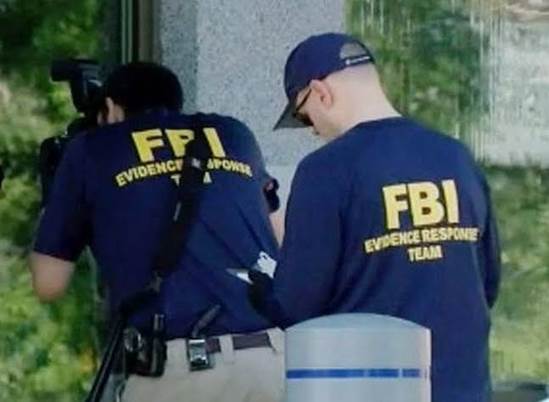
FBI Investigators
The Justice Department says Ellaboudy acquired materials that investigators believe could be used in the construction of homemade explosive devices. Authorities specifically describe the purchases as including precursor chemicals, components and other materials associated with explosive construction. The investigation also allegedly found parts used in the construction of drones and remotely operated aerial systems. (Department of Justice). The federal government alleges that the drones could potentially be configured to deliver explosives. Assistant Attorney General for National Security John A. Eisenberg said investigators believed Ellaboudy acquired materials for explosive devices and drones capable of carrying such devices. (Department of Justice). The available reports describe the alleged procurement at a general level; they should not be interpreted as proof that Ellaboudy successfully constructed or deployed an explosive drone. The case has attracted particular attention because Ellaboudy was employed by the U.S. Department of Energy and reportedly worked as an electrical engineer. His technical background is important to the allegations because prosecutors say he was not simply attempting to transfer physical materials. They allege that he was also using specialized engineering knowledge to assist with communications and power systems. The case therefore raises national-security concerns about the potential misuse of technical expertise by an individual employed within the U.S. federal government. The Justice Department has nevertheless not alleged that the Hanford site or DOE facilities were targeted. The Department of Energy’s Hanford Field Office said, according to reporting by The National, that Ellaboudy’s alleged activities did not involve an attempt to harm the Hanford Site or its workforce, and that the facility was not under threat. (The National). The United States currently designates the Houthis as a Foreign Terrorist Organization (FTO). The federal charge against Ellaboudy is therefore based on U.S. law prohibiting the provision or attempted provision of material support to an organization designated in this manner. (Department of Justice).