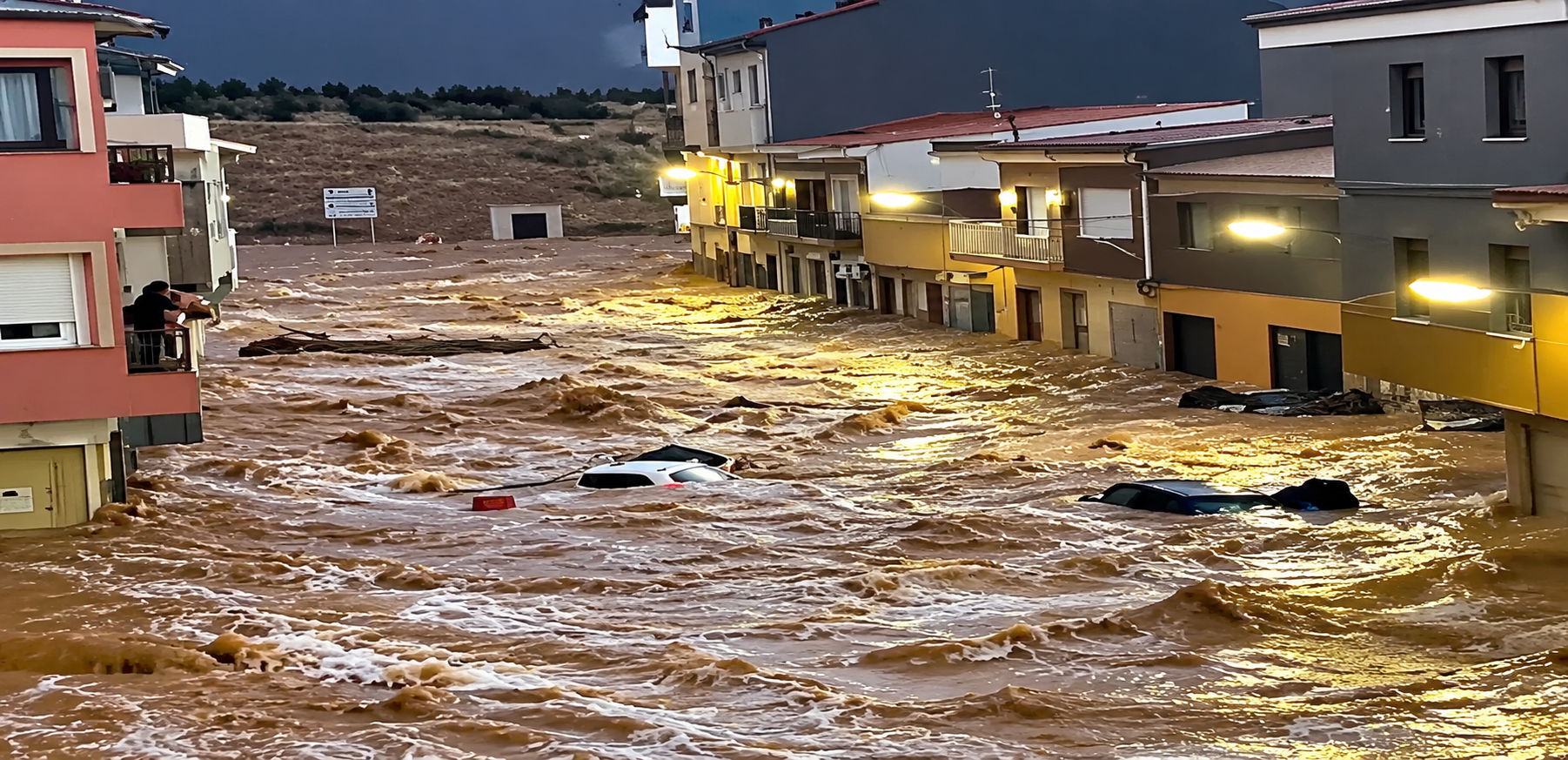
A powerful episode of torrential rain caused severe flash flooding in Madrigueras, in Spain’s Albacete province, Castilla-La Mancha, on Friday, October 2, 2026. Floodwaters rapidly inundated streets, homes and roads, sweeping vehicles through parts of the town and triggering a large emergency response. A 102-year-old woman died after floodwater entered her ground-floor home, while emergency services rescued approximately 90 people who were trapped by the rising water. (DW News). The intensity of the rainfall was a major factor behind the flooding. Authorities reported that approximately 142 litres of rain fell per square metre in Madrigueras over about two and a half hours. That is equivalent to roughly 142 millimetres of rainfall in the same period. However, such concentration of rainfall can overwhelm drainage systems and cause water to accumulate extremely rapidly, particularly in built-up areas. The event was therefore not simply a case of prolonged rainfall but of very intense precipitation arriving within a short window, allowing floodwater to build faster than residents could respond. (El País).
Spain Flood Disaster
The Al Jazeera report described the rainfall as approaching a record daily amount for the region while falling in only two and a half hours, illustrating how unusually concentrated the rainfall was. (Al Jazeera). The most serious reported consequence was the death of a 102-year-old woman. Emergency personnel found her dead inside her home after floodwater entered the property. Reports indicates that water inside the residence reached more than one metre (about 3.3 feet). Because the woman was on the ground floor, the rapidly rising water created a particularly dangerous situation. Spanish authorities confirmed the death, while local reporting indicated that the victim had become trapped in her flooded home. (DW News). The death highlights one of the particular dangers of flash floods: people inside ground-floor properties may have very little time to escape once water begins entering a building.
Flood Rescue Operation
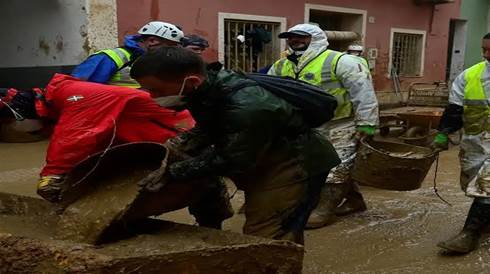
The flooding resulted in a major rescue operation. Emergency services carried out around 90 rescues, many involving people who had become trapped inside flooded homes. (EFE Noticias). Authorities received numerous emergency calls from residents who were frightened and uncertain about what to do as the water accumulated. Rescue personnel therefore had to respond to multiple locations across the town rather than dealing with a single isolated incident. (infobae). The scale of the operation demonstrates how quickly the situation developed. Floodwaters affected residential properties and vehicles, forcing emergency teams to evacuate people from areas that had become unsafe. One of the most visible effects of the flooding was the movement of vehicles by the water. Footage from the affected area showed cars floating, being pushed through streets and accumulating on top of one another.
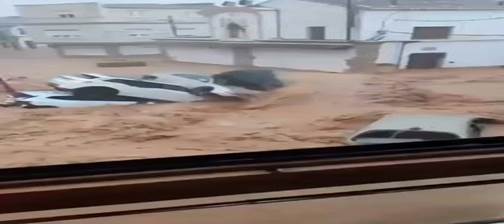
Submerged Vehicle in Spain Flood
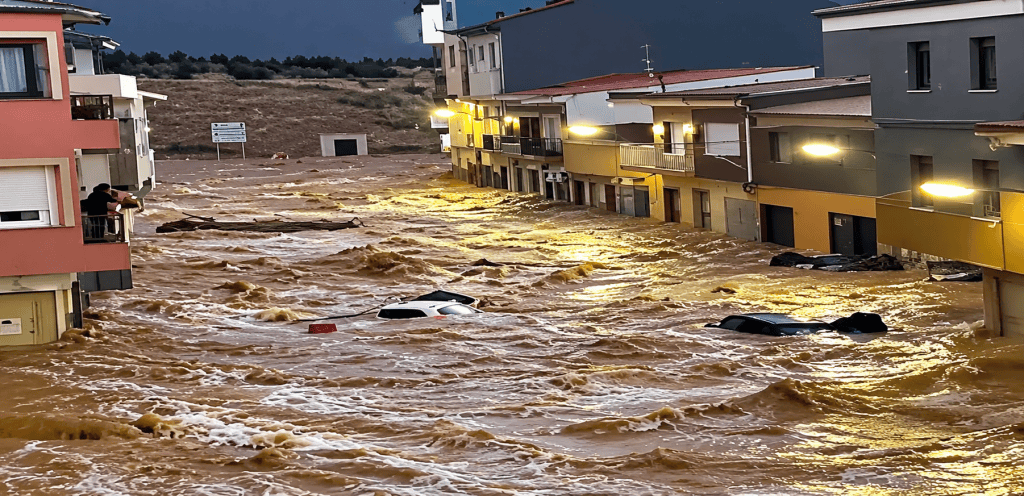
Reuters footage showed submerged vehicles and flooded streets and roads in the area. The Spanish Civil Guard also reported severe flooding affecting urban and interurban roads, with the large volume of water sweeping vehicles away. (Reuters Connect). Moving water is particularly dangerous because even a relatively shallow but fast-flowing flood can exert substantial force on vehicles. Once a car loses traction and begins floating, it can be carried into other vehicles, buildings or people. The regional government of Castilla-La Mancha activated its METEOCAM emergency plan at Operational Situation 1 in response to the flooding. Emergency personnel included firefighters, the Civil Guard, civil-protection authorities and other response organizations. (EFE Noticias).
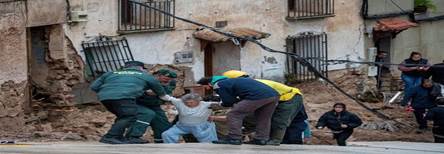
Rescue ongoing
The Guardia Civil’s Citizen Security Unit (USECIC) remained deployed during the emergency, while GEACAM personnel were expected to assist with cleaning and recovery operations. Authorities also began removing vehicles and clearing areas affected by mud and flood debris. (infobae). Some roads leading to Madrigueras were subsequently reopened, including the CM-316 and AB-105, while the CM-3222 remained closed at kilometre 5 according to the regional emergency information reported by EFE. (infobae). The Madrigueras disaster occurred as part of a broader period of severe rainfall affecting eastern and southeastern Spain. Other parts of the country also experienced exceptionally heavy precipitation, with authorities issuing weather warnings for multiple regions. Spanish meteorological authorities warned that intense and locally torrential rainfall would continue in parts of eastern Spain. Reports on October 3 said numerous autonomous communities were under weather warnings, with particularly serious conditions in parts of Catalonia and the Mediterranean region. (El País). Rainfall totals elsewhere were also substantial. For example, El País reported measurements of 186 litres per square metre at La Murta near Alzira, while other stations in Murcia, Tarragona and Castellón recorded significant accumulations. (El País). The floods occurred shortly after Spain experienced an exceptionally hot summer. Deutsche Welle, citing reporting from Reuters and AFP, noted that Spain had experienced its hottest summer on record, while the country had also faced severe wildfires during the preceding months. (DW News). The immediate cause was the exceptional episode of torrential rainfall. Establishing how much a particular storm was influenced by long-term climate change requires formal attribution analysis rather than assuming that every individual extreme-weather event is directly caused by climate change. Following the rescues, authorities began moving from the immediate life-saving phase toward cleanup, damage assessment and recovery. Vehicles left stranded or piled up by the floodwaters had to be removed, while streets and affected properties required cleaning. The authorities’ response also focused on maintaining security and helping residents whose homes had been damaged. The regional emergency operation involved local government, firefighters, the Civil Guard, civil protection, Cruz Roja and other organizations. (infobae).