
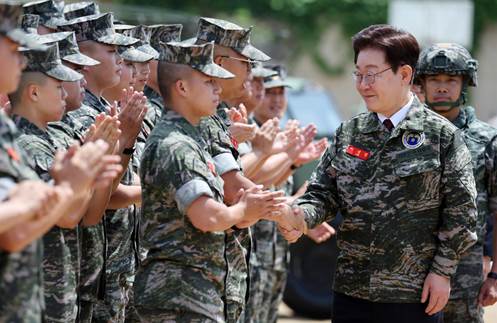
South Korean President Lee Jae Myung has firmly stated that South Korea will not deploy troops or military assets in a manner that would draw the country into the ongoing Middle East war involving Iran. At the same time, Seoul is considering whether to strengthen measures aimed at protecting South Korean citizens, commercial vessels and crude-oil shipping through the strategically important Strait of Hormuz. (Reuters). The announcement is significant because South Korea is a major energy-importing country, maintains a close security alliance with the United States, and already has a naval unit operating in waters near the Middle East as part of an anti-piracy mission. According to South Korea’s Yonhap News Agency, Lee said there would be no troop dispatch that could lead to South Korea becoming involved in an overseas conflict, while emphasizing that this principle had been followed previously and would continue. (Yonhap News). Reuters likewise reported that Lee said Seoul would not deploy military assets to the Middle East if doing so could involve South Korea in the conflict connected with the Iran war. (Reuters). This does not, however, mean that South Korea intends to completely withdraw from security activities in the region. Lee said Seoul was examining what he characterized as the minimum necessary measures to protect: South Korean citizens in the region; South Korean commercial vessels; crude-oil transportation routes; South Korea’s broader economic and national interests (Yonhap News).
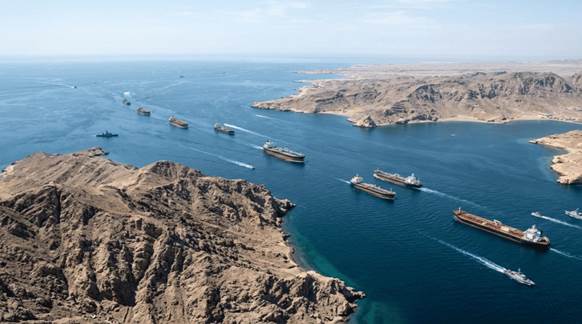
The Strait of Hormuz is particularly important to Seoul because South Korea depends heavily on imported energy. Reuters reported earlier this month that approximately 61% of South Korea’s crude-oil imports and 54% of its naphtha imports passed through the Strait of Hormuz in the previous year. (The Print). Consequently, instability in the waterway could have consequences far beyond military security. Disruptions could affect: Crude-oil supplies, Fuel prices, Petrochemical production, Shipping costs, Manufacturing, Inflation, South Korea’s wider economy. This why Seoul is considering maritime-security measures even while ruling out participation in combat operations.
South Korea already operates the Cheonghae Unit, a naval force that has traditionally participated in anti-piracy and maritime-security operations around the Gulf of Aden. President Lee referred to the unit when discussing possible measures to protect South Korean interests. Yonhap reported that the unit has expanded the scope of its mission to conduct relevant activities in the region, while the government is considering whether those efforts should be strengthened. (Yonhap News). The distinction is important: protecting South Korean ships and citizens is different from joining military operations against Iran or another party to the conflict.Lee’s position, as reported by Reuters and Yonhap, is that any additional activity must not cross the line into participation in the war. (Reuters).However,the decision did not emerge suddenly.During President Lee’s September state visit to France, he discussed the Strait of Hormuz and freedom of navigation with French President Emmanuel Macron. South Korea and France agreed to continue coordination concerning freedom of navigation and global supply-chain stability.However, Seoul subsequently clarified that the discussions did not amount to a decision to send troops.South Korean National Security Adviser Wi Sung-lac said at the time that Seoul was examining different ways to contribute to maritime security but that no decision on deployment had been made (The Print).

South Korea also sent an inspection team to the United Arab Emirates to examine security conditions in the region. The government said the mission was for information gathering and did not itself mean that Seoul had decided to deploy combat forces. (The Print). Consequently, the question is also sensitive because Tehran could interpret military participation by South Korea differently depending on the nature of the mission. Reuters reported that Iran’s foreign ministry had warned that South Korean military participation in operations in the Gulf or Strait of Hormuz would be regarded by Tehran as support for the United States and could have serious consequences. (The Print). That makes the distinction between maritime protection and combat participation particularly important for Seoul.A mission designed solely to protect South Korean merchant vessels would carry a different political and military meaning from a mission involving offensive operations or participation under another country’s command.


